
TEXT: Anna-Emilia Haapakoski
PHOTOS: Ecological Pilgrimage team
15 August 2026 – Beginning the journey
In August 2026 right after the summer holidays it was time to travel to Vingelen. Two day before the first transnational walking intervention of Ecological Pilgrimage in the Norwegian mountains, myself, Salla, and Daijiro woke up before first light and met at the Rovaniemi train station 5AM. We had planned our journey well in advance as we wanted to travel to Norway slowly, savoring the land and the sea in between. After the day’s train-ride we met Olli at the station in Vaasa, on the shore of Finland. Olli is a documentarist and a friend of mine who related with our plans regarding ecological pilgrimage and decided to join us. Together we took the ferry to Umeå and spent the hours crossing the gulf writing an application for Ecological Pilgrimage the movie, dreaming big in the middle of the foggy sea. In the harbor our team grew bigger again as we were greeted by our colleague, and host for the night, Maxim.
16 August 2026 – Finding our way
The next evening, after traveling with a train, a bus, a ferry, and a rental car, we arrived at a cabin near the border of Sweden and Norway and met the Swedish part of our team. After various meetings in Teams we now got to cook together and combine our swirling thoughts about ecological pilgrimage, finally coming together as a team without the physical distance and electronical devices. Early in the morning we continued the drive between the mountain lines to reach Vingelen.
17-19 August 2026 – Staying together
Together at last on Monday morning in the mountain village of Vingelen. Organised by our partners from NINA and the National Pilgrim Centre of Norway the first time being together as a team of ”ecological pilgrims” was to learn from the historical traditions and existing efforts for managing old pilgrim routes. Invited to walk together in the mountain region we were offered the opportunity to engage with the reparative practices of listening to nature, and learn from local multispecies relations and the region’s hidden Sámi histories. Staying under one roof at Vingelsgaard guesthouse – what a lovely beginning for our quest of repairing relations. Inconveniently yet fittingly, we had agreed on starting this walk from a place of uncertainty and without a map. It feels appropriate that this journey is a leap of faith as much as a scientific inquiry in the time due for an ecological redemption. Like Isabelle Stengers 1 describes, we do not know if, or how, we will be able to compose with Gaia, but we have no other option than to trust that we can make a difference, however small, a difference that calls for other differences to be made elsewhere.
The Weave
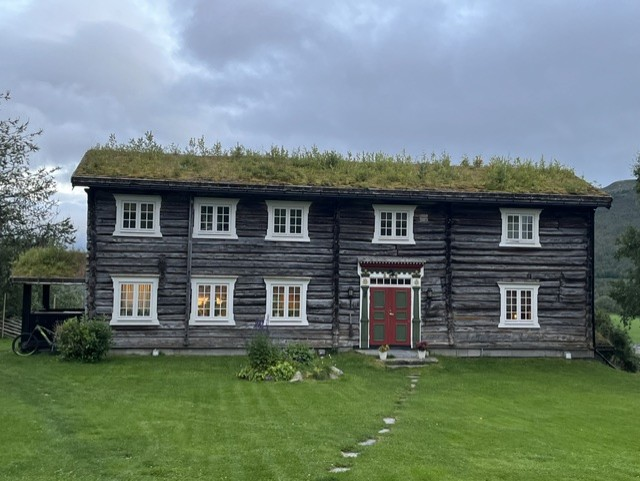
Once upon a time there was a guest house in a breath-takingly beautiful mountain village in the inlands of Norway. In this cocoon made of majestic mountains it might have been easy to forget why we were there. Alarmed by the ecological crises we had come together as a group of researchers and practitioners to plot for an intervention in a situation where scientific data about the worsening state of our biosphere was proven to be inefficient to prompt a change in the root cause of the problem, the practices of modern humanity.
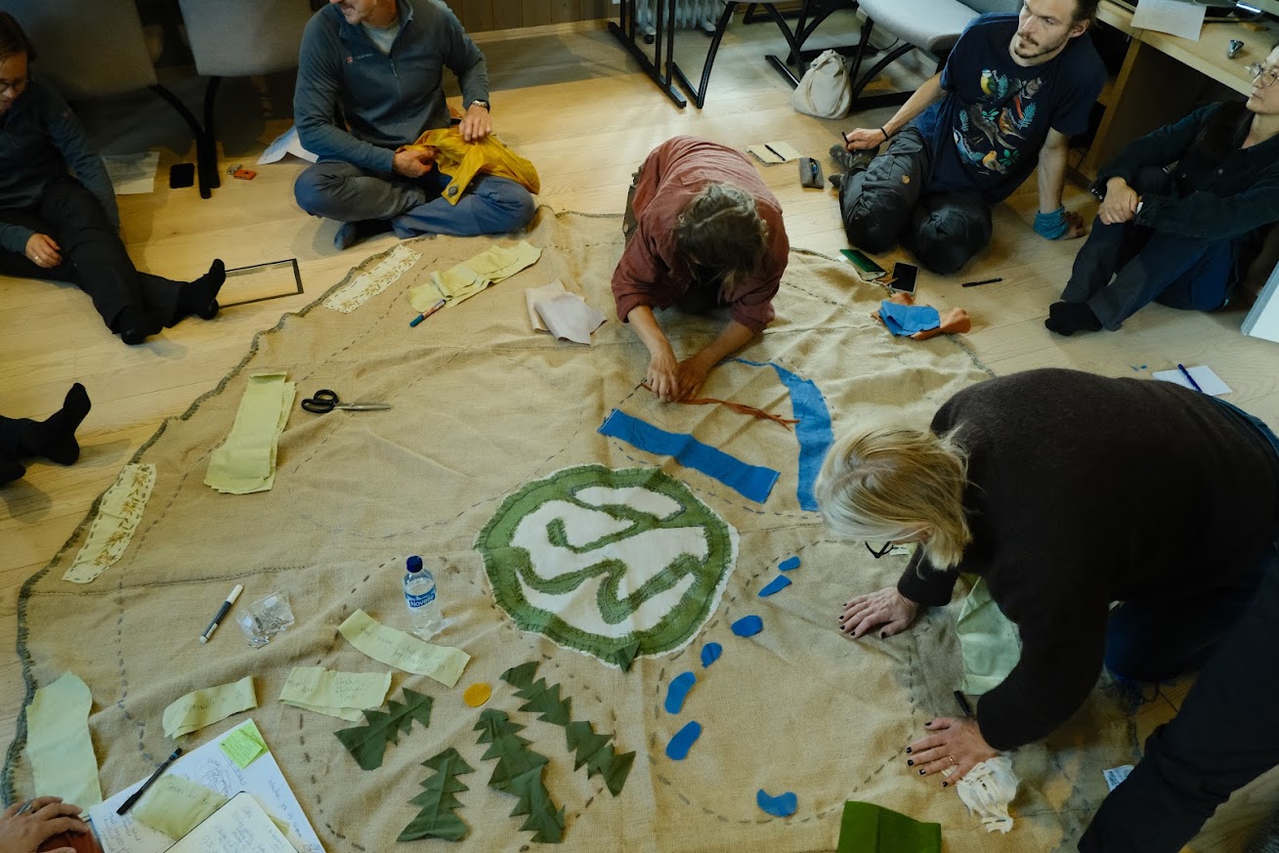
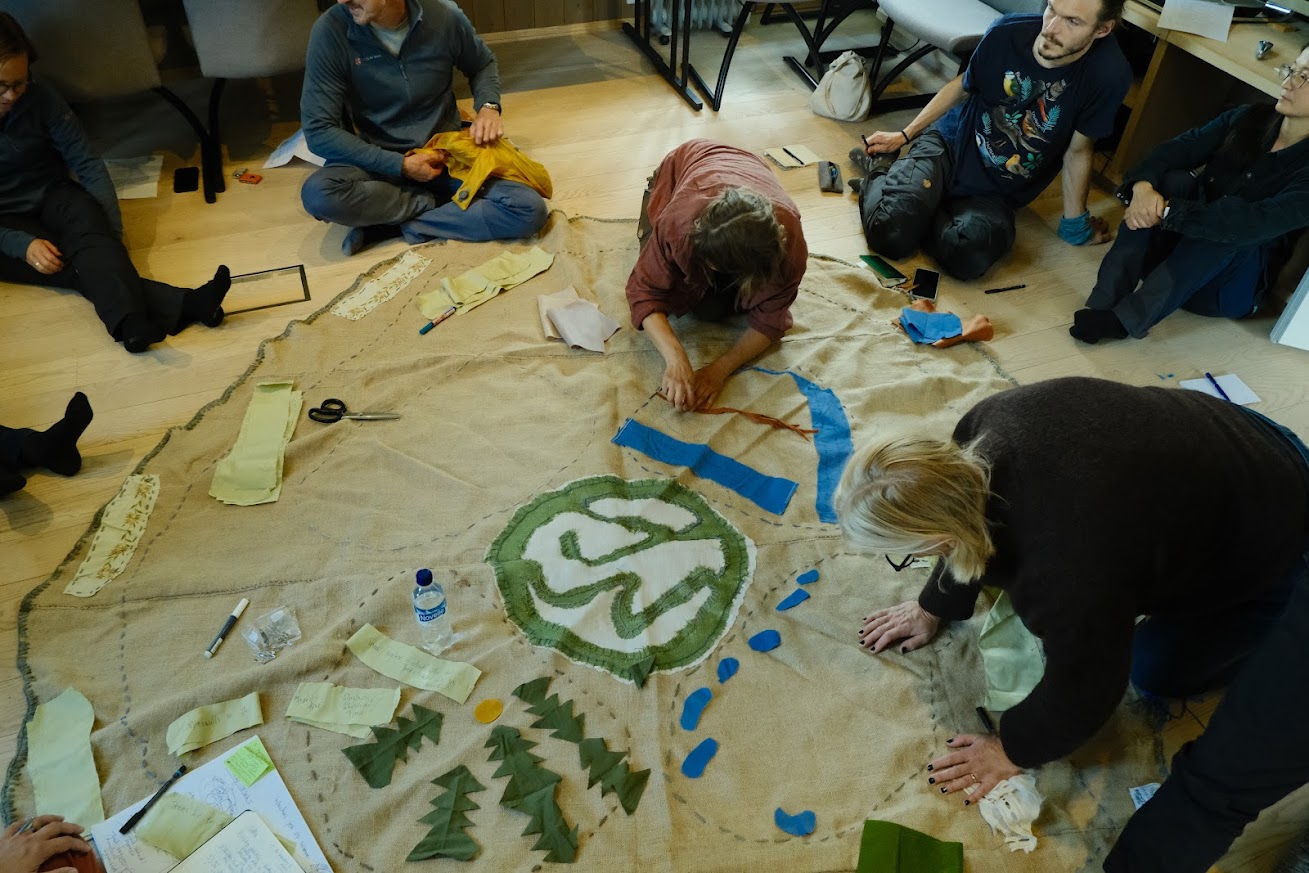
Coming from four Nordic countries in a relatively proximate distance, we found the questions troubling our minds rather similar. Gathering around to share our initial ideas and concerns related to the needed change felt like we were onto something shared. While internally torn by the uneasiness of facing the global ecological crisis and the ease of turning towards the brighter sides of life, sowing the first stitches to signify the beginning of our journey together reminded me of a guidance from one of my favorite poets, Andrea Gibson 2, that I hold close to my heart.
We have to create. It is the only thing louder than destruction.
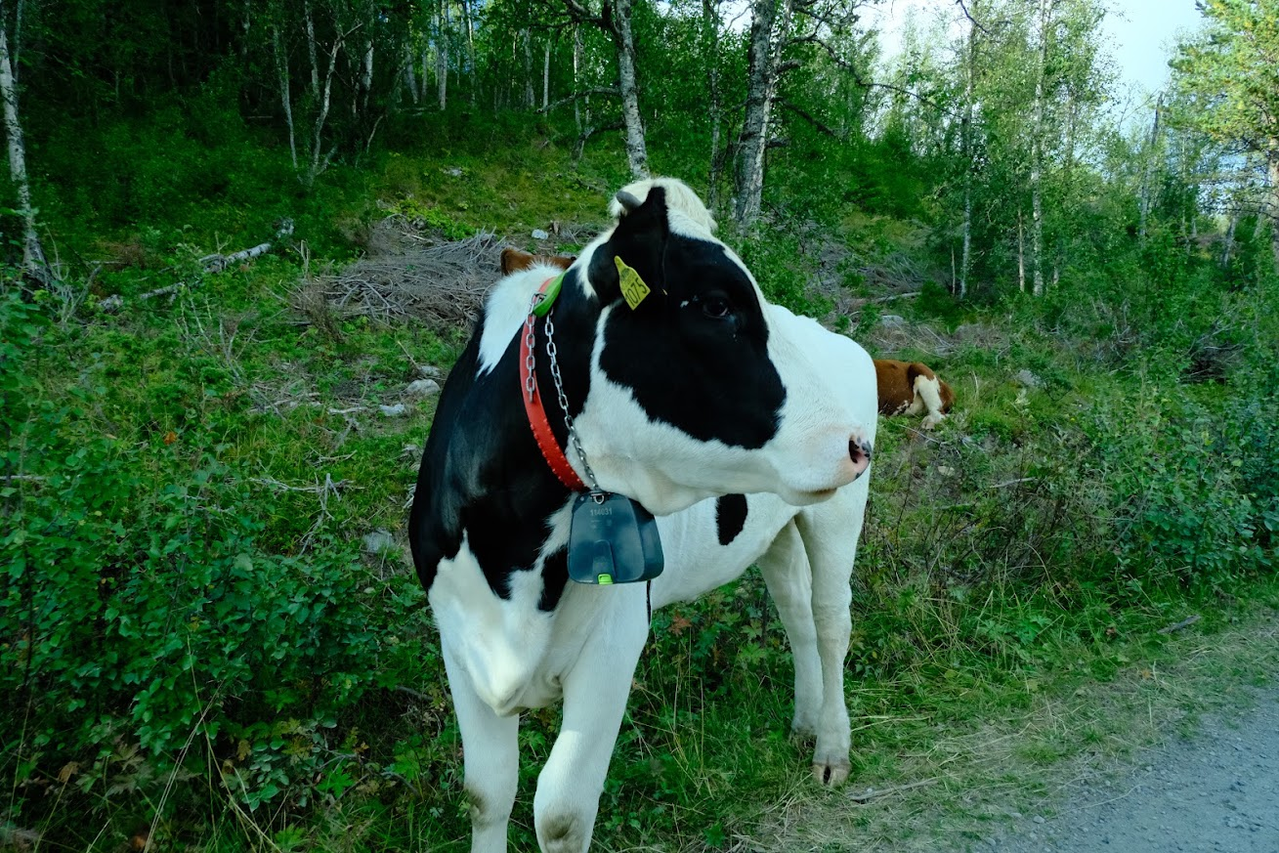
On our way to the Forollhogna National Park, crossing the mountain lands we met many cows and sheep. They looked happy and free. Not attached to milking machines in a dairy farm factory hall. Enjoying the sun and their right to roam. Without a shared language I could only hope, not make sure. Every time I encounter a cow I cannot help but think of the immense gifts they provide to humans during their lives. How could they ever be reciprocated? Maybe we Nordics could learn from their divinity as described in many ancient, still present Indian and African cultures, where they are seen as representatives of the ever prosperous cyclical nature of life.
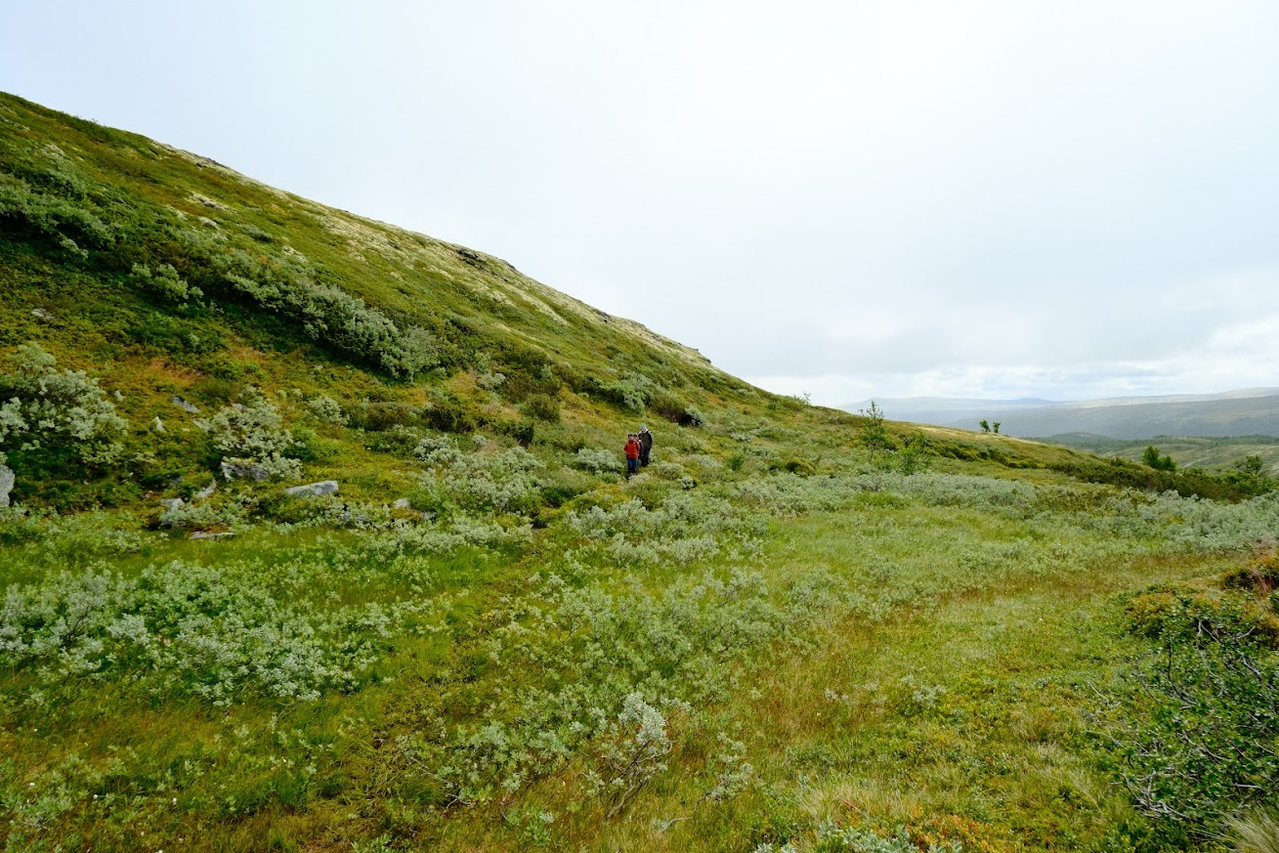
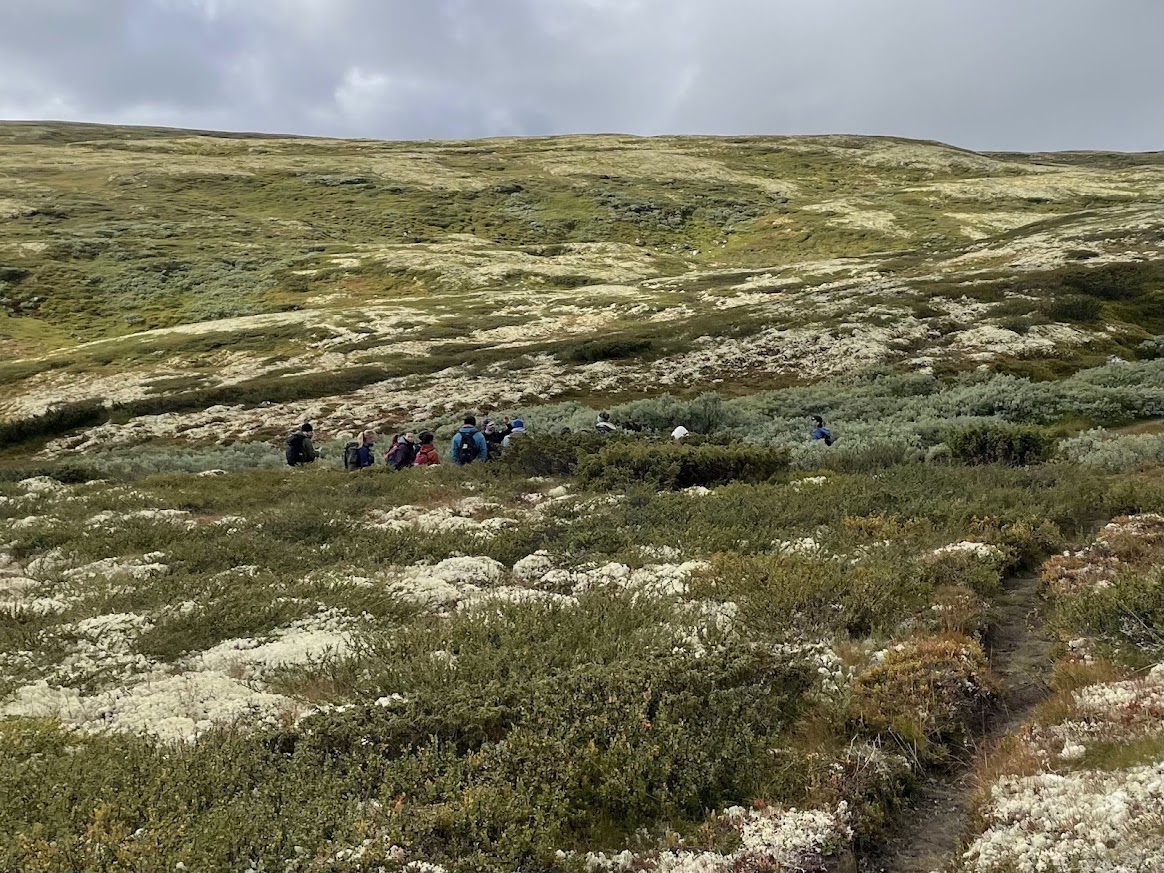
Beginning our walk across the mountains and valleys, I bet I speak for the behalf of the team when I say we were in awe of these grazing grounds of Forollhogna wild reindeer. Although we had heard of them, we did not manage to meet any. Still the reindeer did circle around in many, if not most of our conversations. Learning about the lost connection between Indigenous Sámi people and the reindeer in these regions reminded us once again that the present might not always be obvious in teaching us about the future. Sometimes revisiting past may be required with some more effort, looking for traces and keeping ears out for the silenced voices. Hearing the whispering remains of the Indigenous Sámi culture of Forollhogna did not make me think of destruction however, but rather creation, particularly that possible only through a culture that builds on more-than-human kinship and lives by a mutual respect between species. For example Anne-Maria Magga3 describes how these principles are enacted by siidas and their laws, governing the land use of Sámi reindeer husbandry.
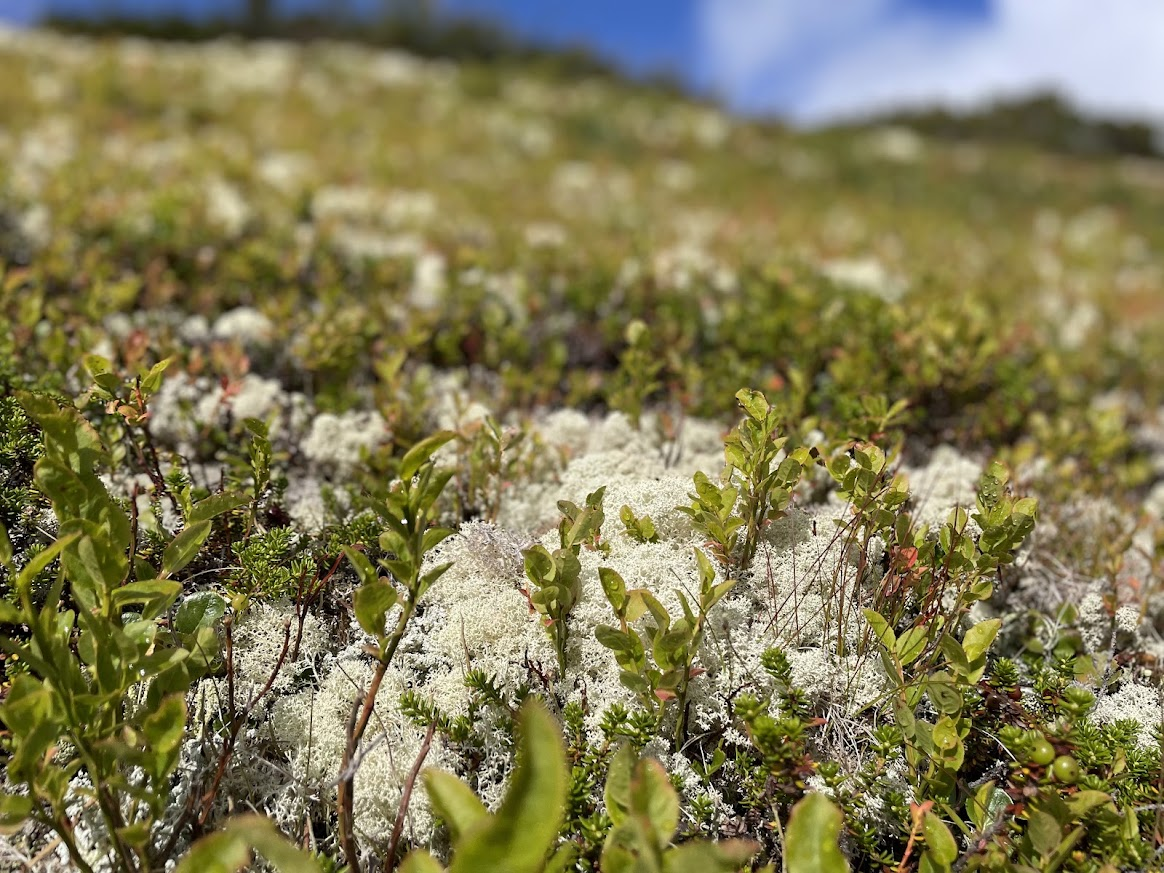
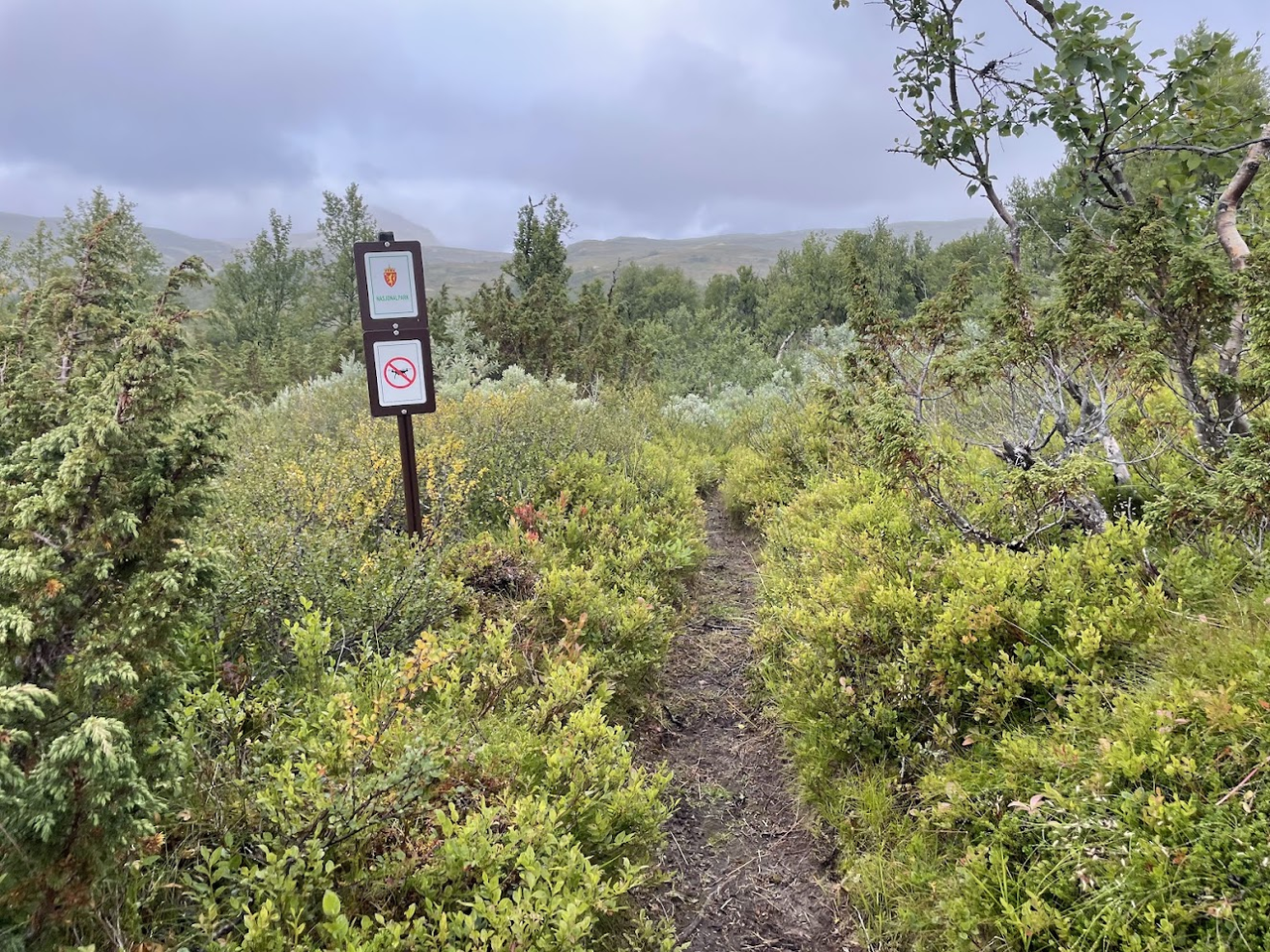
Mattias told us that the pilgrim route of St. Olav’s Way was the only path crossing the region. The muddy path was only a small trace, and we learned that the park management prefers it so. Around us, the abundant delicacies of reindeer, lichen, under our feet made us tread lightly when stepping of the path for a break.
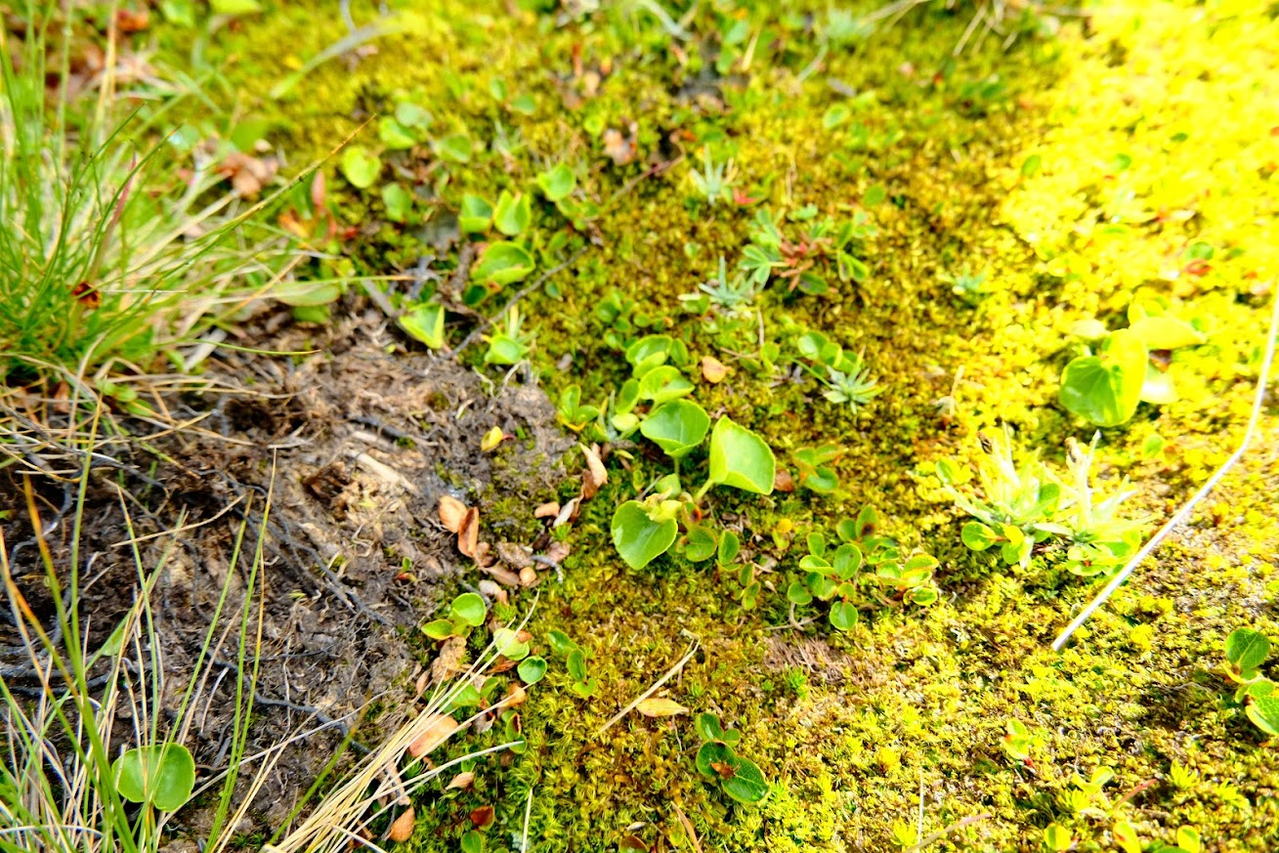
We were lucky to be accompanied by a botanist, too, Lise, who helped us to pay attention to this tiny plant growing on the mountain bed. She told is that in Norwegian they are called ”mouse ears”. Hopeful that the mountain is listening to our hopes and fears for the future I whispered a call for guidance.
Please lead us pilgrims so we do no harm. Help us find our way and we won’t stray.
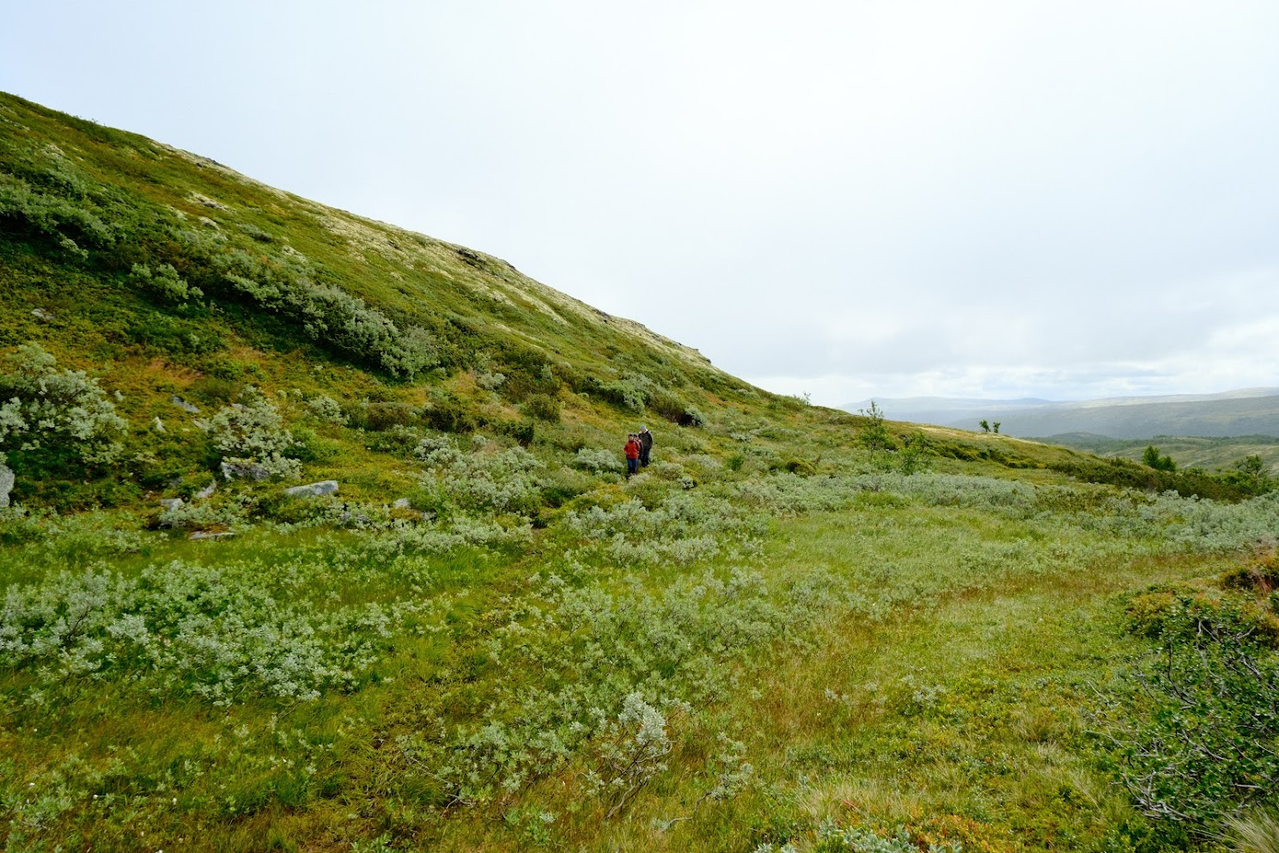
We promise to step softly and stay slow.
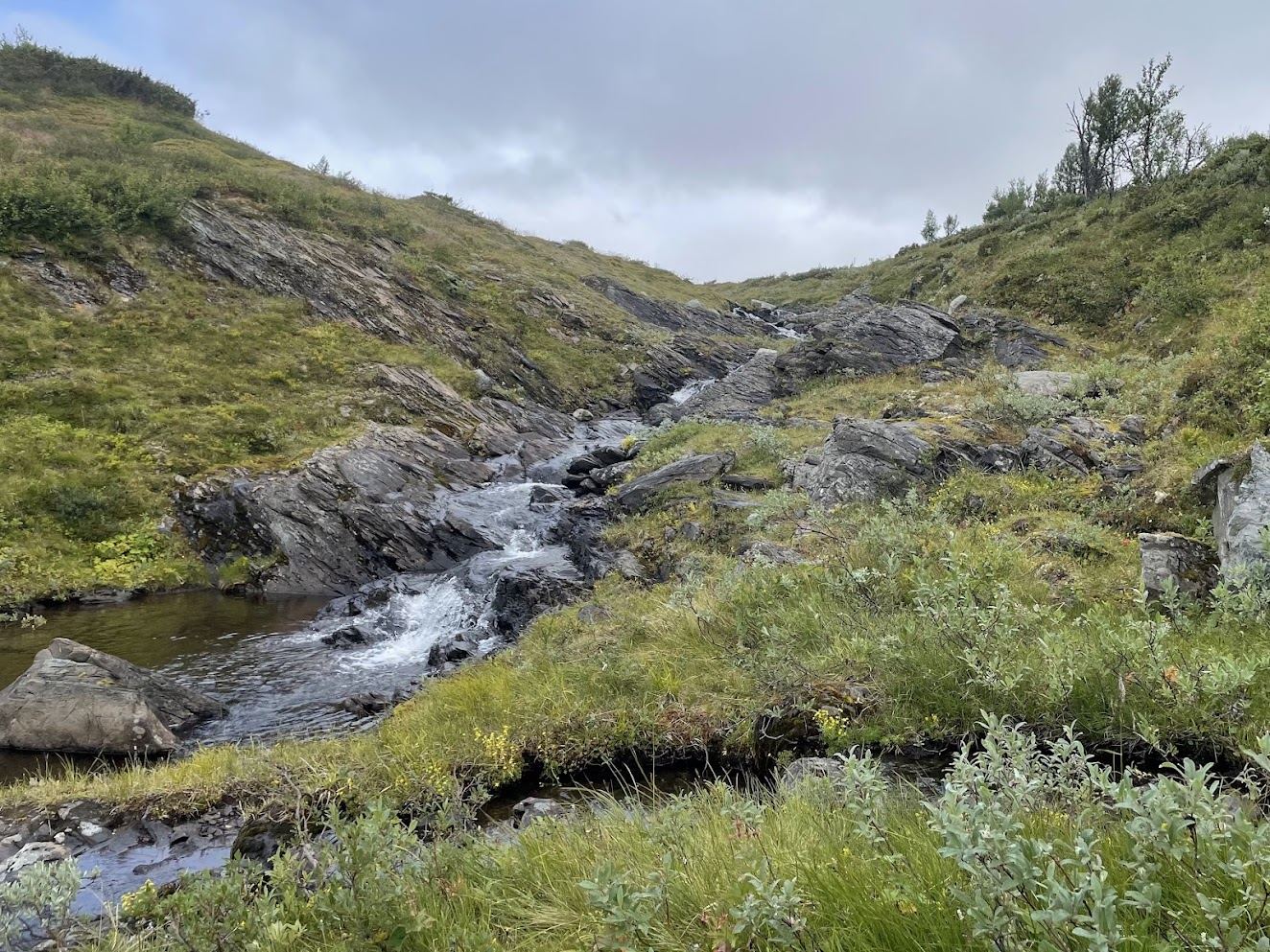
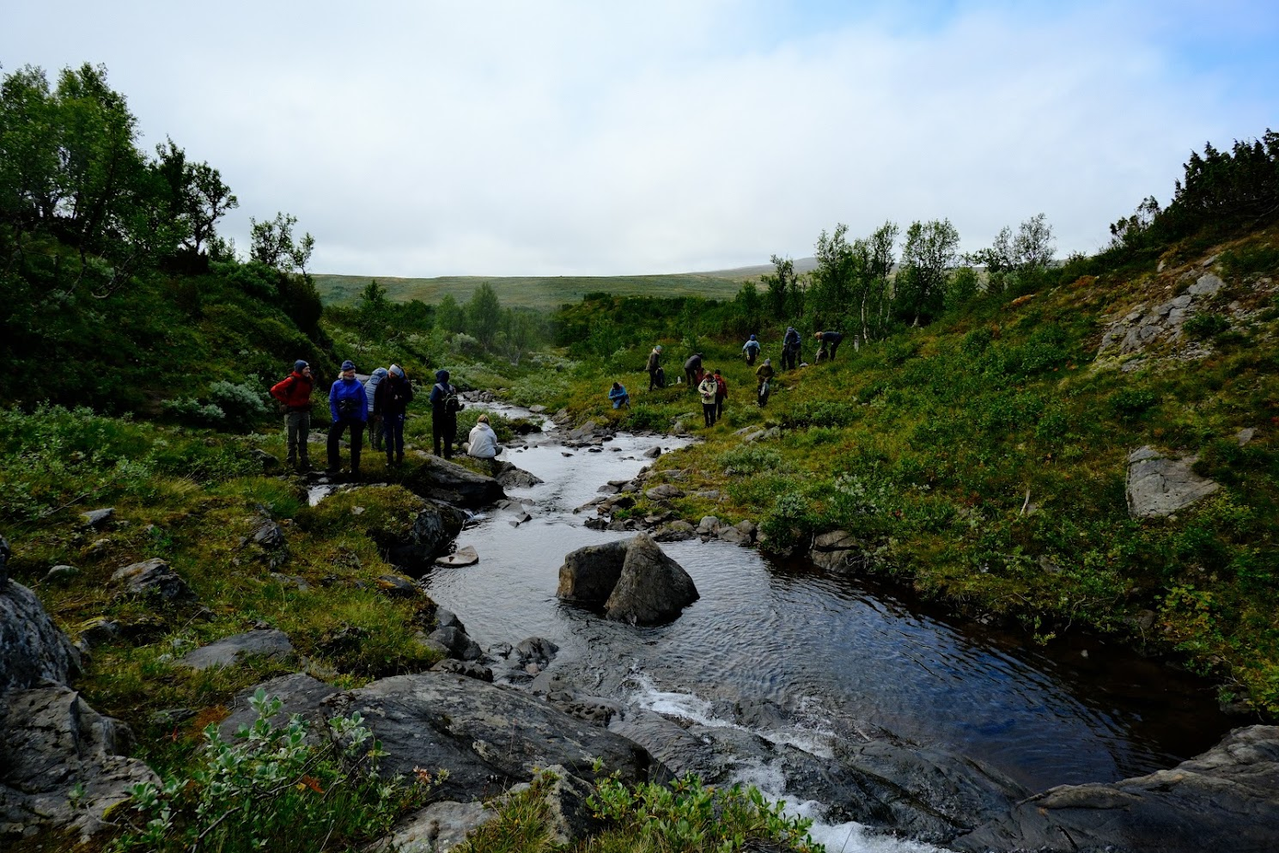
Like on your shoulders calmly the rivers flow, show us where we need to go
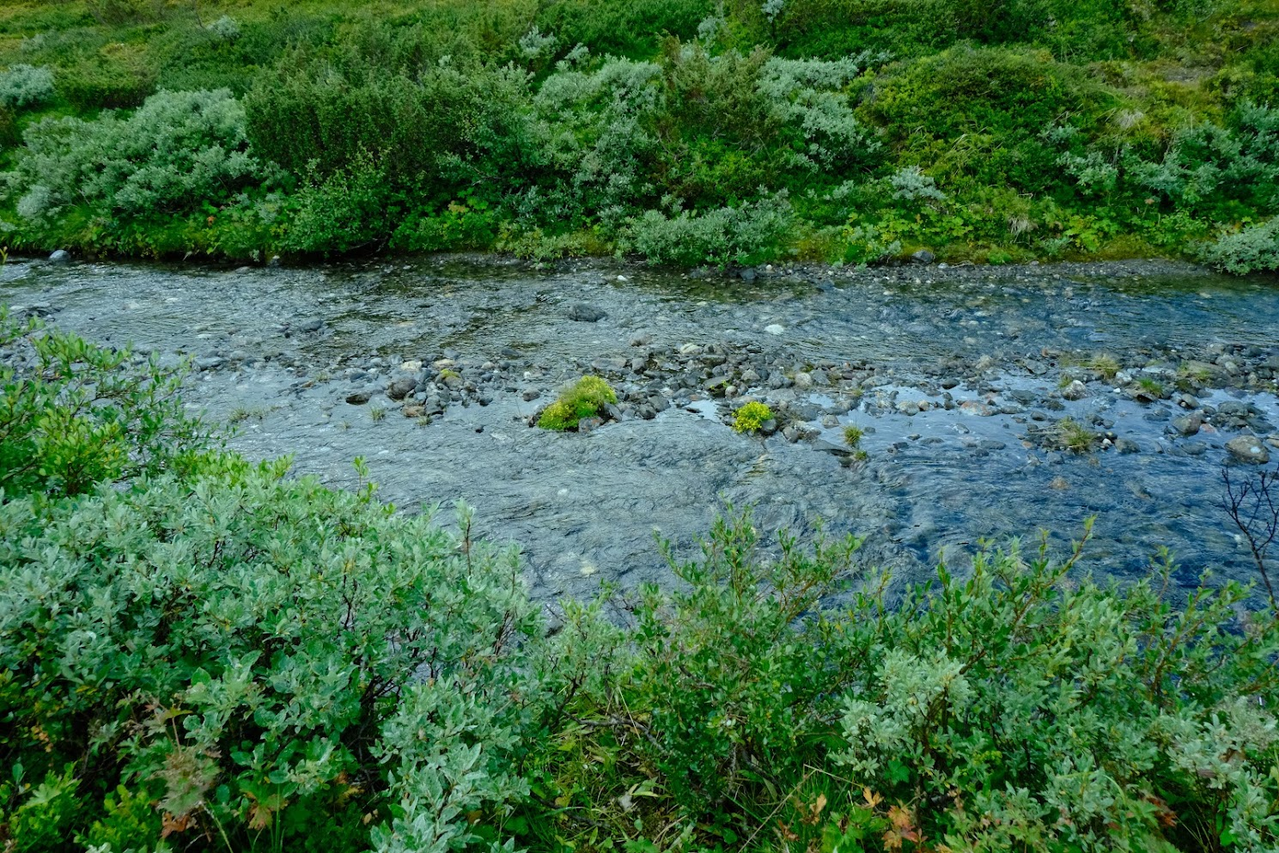
While this journey knows no end
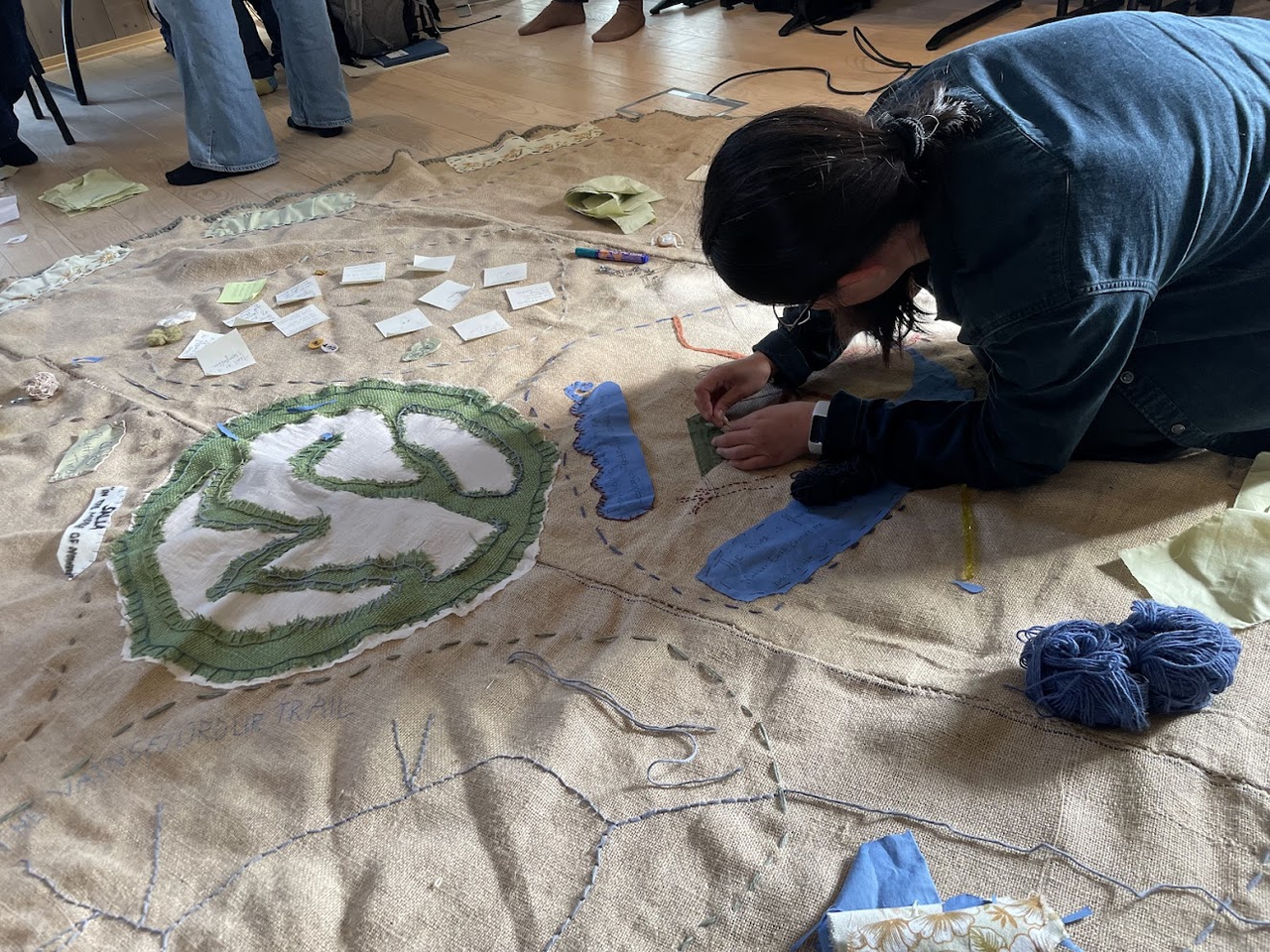
we’ll weave together what’s our to remend.
Looking back on this trip, walking is indeed when the best ideas surface. I think Nietzsche has said something like that before. On the other hand, one should never underestimate the power of a good circle either. Gathering around the fabric (crafted and gifted to our team by our PI Emily) at the end of each day, with a needle or without, sowing certainly weaved the team together, too, I believe. We have started by stringing together reparative practices from our case study areas, to learn from them, and to think together with these existing practices to move slowly forward with our walk. Now, on the last day, looking at the patchy cloth between us, I think back to Robin Wall Kimmerer’s4 call to action and feel like we are on the right tracks:
Let us hold a giveaway for Mother Earth, spread our blankets out for her and pile them high with gifts of our own making. Imagine the books, the paintings, the poems, the clever machines, the compassionate acts, the transcendent ideas, the perfect tools. The fierce defense of all that has been given. Gifts of mind, hands, heart, voice, and vision all offered up on behalf of the earth. Whatever our gift, we are called to give it and to dance for the renewal of the world.
Special thank you to our Norwegian team for welcoming us into your world:
Tuva, Mattias, Guro, Lise, Stine, and our host Ingrid at the beautiful Vingelsgaard
1 Isabelle Stengers (2018) Another science is possible: A manifesto for slow science 2 Andrea Gibson (2018) Take me with you 3 Anne-Maria Magga (2024) Siidan lait. Saamelaisen poronhoidon oikeusperiaatteet ja -teoria 4 Robin Wall Kimmerer (2013, 384) Braiding Sweetgrass: Indigenous wisdom, scientific knowledge, and the teachings of plants