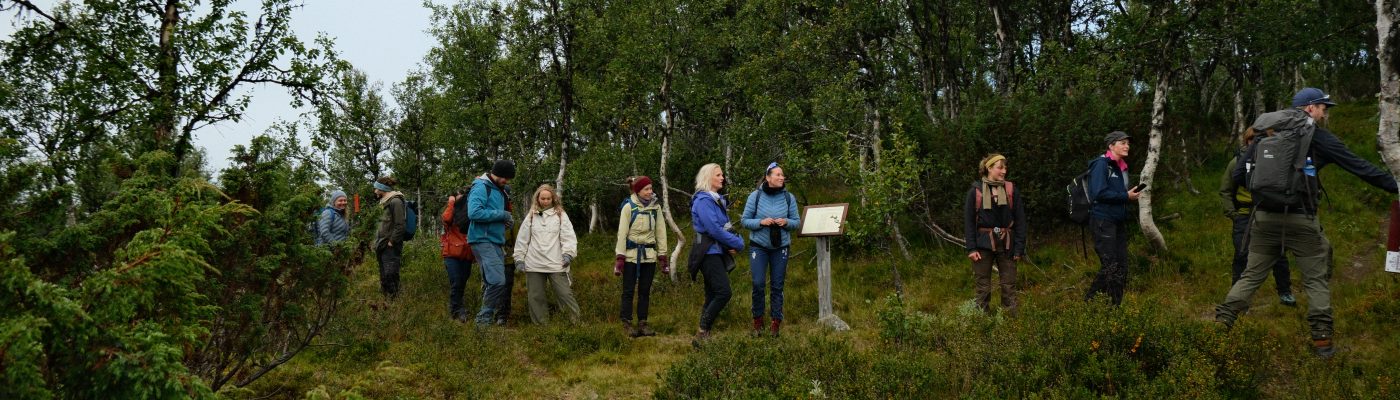
With biodiversity in rapid decline, there is an urgent need to rethink how people relate to the more-than-human world. As part of the Ecological Pilgrimage project, the research team from NINA has joined forces with the National Pilgrim Centre to explore what a walking intervention might look like in Vingelen and the surrounding Forollhogna region. The Østerdalsleden pilgrimage route, part of the Pilegrimsleden – St. Olav Ways to Trondheim, serves as our geographical and thematic starting point. This active pilgrimage route follows historic paths and ancient roads through a landscape where traces of St. Olav heritage and pilgrimage history also can be found.
Rather than beginning with a program of activities, much of our first year has been spent walking, listening, and asking questions together with local inhabitants and experts.
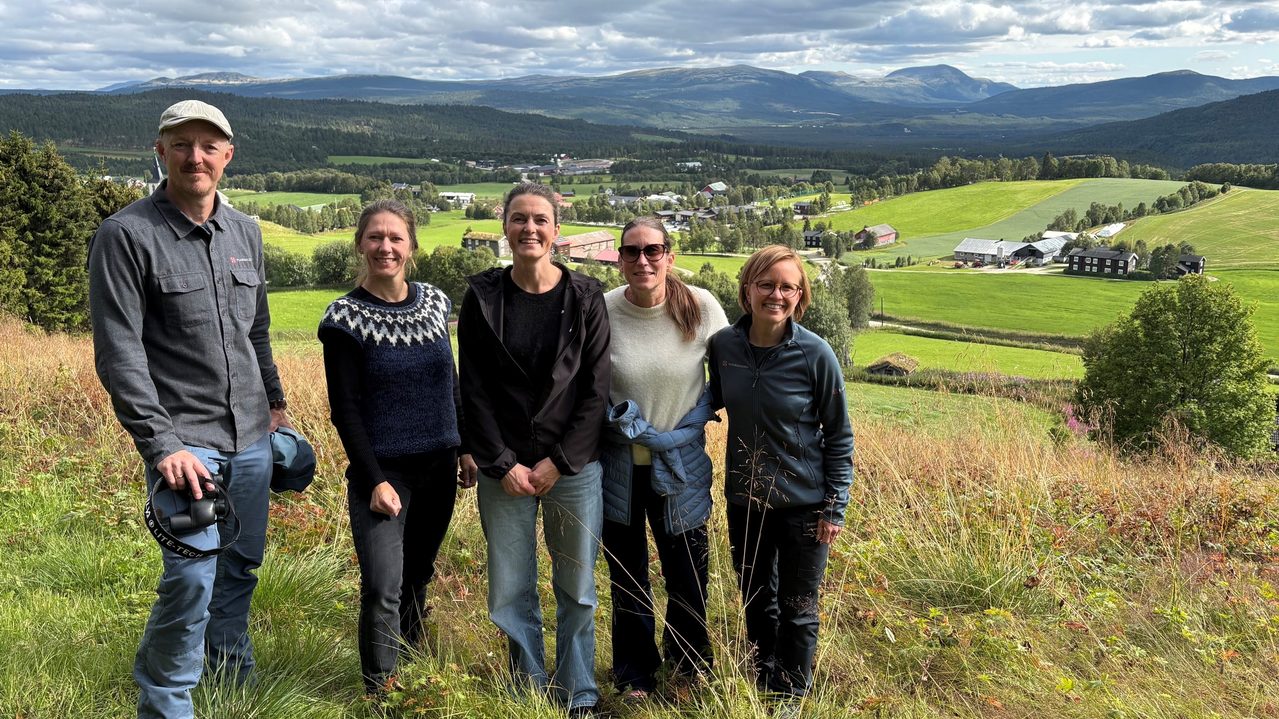
What makes a good path?
At first, the question seemed practical: Should our selected route be long or short? Close to the village or further into the mountains? Yet beneath these logistical concerns lay a more fundamental question: What should a path offer, and how might it open up people’s senses and awareness?
As we met with local residents, mountain guides, heritage practitioners, park managers, Sámi representatives, and our international project partners, it quickly became clear that there is no single answer. For some, a good path offers silence and solitude. For others, it creates opportunities for conversation, learning, or physical exercise. Some seek seemingly wild landscapes, while others are drawn to cultural landscapes. A landscape that feels like home to one person may evoke grief and loss in another.
Across these conversations, one theme emerged repeatedly: walking is about far more than moving from one place to another, and no path carries a single story.
Layered landscapes, different ways of seeing
During shared walks, participants spoke about sounds, smells, textures, memories, and histories. Attention shifted from the ground beneath our feet to flowering meadows, grazing animals, stones, forests, and distant mountains. We experienced how individual and cultural knowledge changes what becomes visible and invisible in a landscape. A seemingly ordinary field became evidence of generations of farming, while traces of older hunting, gathering, and Indigenous land-use practices remained silenced beneath the current agricultural mountain landscape.
The paths we followed opened up different questions and ways of seeing depending on who we walked with. It has become evident that we need to consider which histories are foregrounded, which remain hidden, and whose footprints we are invited to notice. Walking became not simply a way of accessing nature, but a way of encountering layered landscapes where different forms of knowledge, memory, and belonging coexist.
Can a path help us slow down?
Many of our international project partners work with guided walking and nature experiences. In Vingelen, our discussions have increasingly focused on a different possibility: how can a path itself encourage people to slow down, open their senses, and make new acquaintances?
Our walking partners often returned to the importance of attention. Attention and awareness create space for reflection, and reflection often requires us to slow down.
Inspired by an exercise led by NINA botanist Lise, we experimented with pausing, paying attention to details along the path, and asking: Who are you, and why are you here? The question might be directed towards a tiny plant we would normally step over, an insect crossing the trail, an old stone wall, or even the village viewed from an unfamiliar angle. The purpose is not necessarily to produce answers, but to cultivate curiosity and wonder.
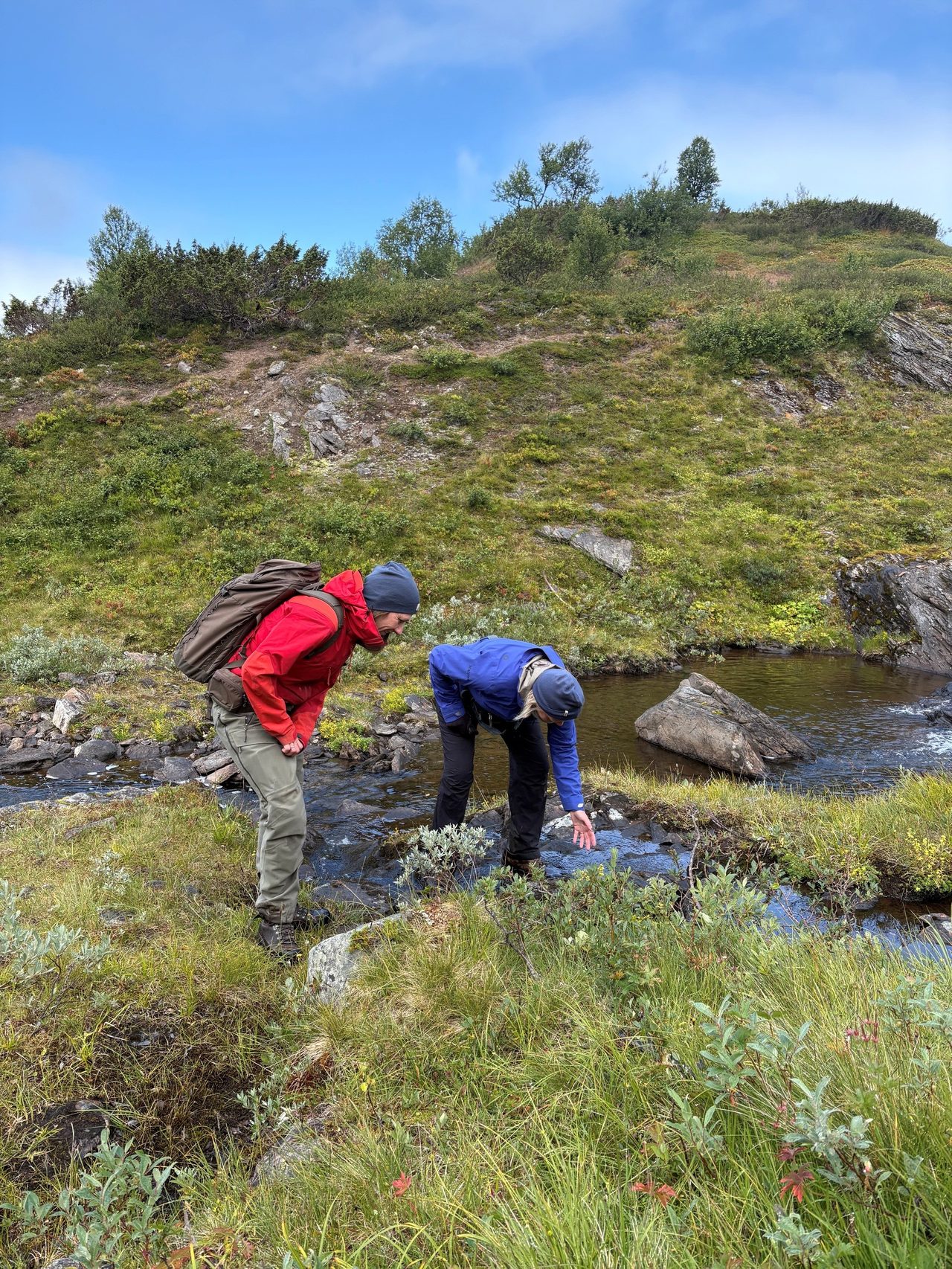
Inviting encounters rather than providing answers
This emphasis on attention has steered us away from adding extensive infrastructure or information to a path. Instead, we are exploring how existing features along a route might invite small moments of encounter: a bench overlooking the valley, the smell of newly cut grass, the sound of a tractor, or the transition from open farmland into dense forest. Such moments already encourage walkers to stop, look, listen, smell, touch, and reflect.
Our task onward is therefore not simply to provide more information, but to consider how we can gently strengthen these sensory invitations and create opportunities for meaningful encounters with what is already there.
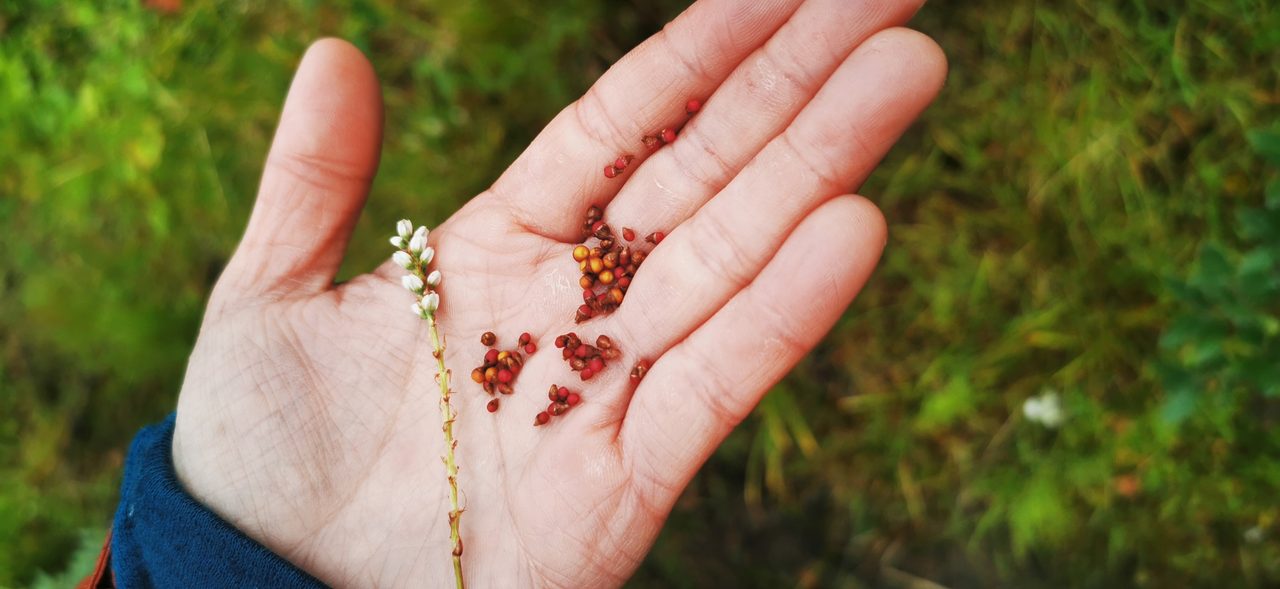
As we move into the next phase of Ecological Pilgrimage in Norway, one lesson already feels clear: before designing new ways for people to engage with a landscape, we had to learn how that landscape already invites engagement.
Over the past year, Vingelen has reminded us that paths do more than lead us through places. They shape how we pay attention, what we notice, and who or what we become acquainted with along the way. At the same time, both the landscape and the species inhabiting it hold quieter stories and forms of wisdom that is hidden and mostly unnoticed.
TEXT: Tuva Beyer Broch, Lise Tingstad, Stine Rybråten and Guro Berge Vistad
PHOTOS: Ecological Pilgrimage team