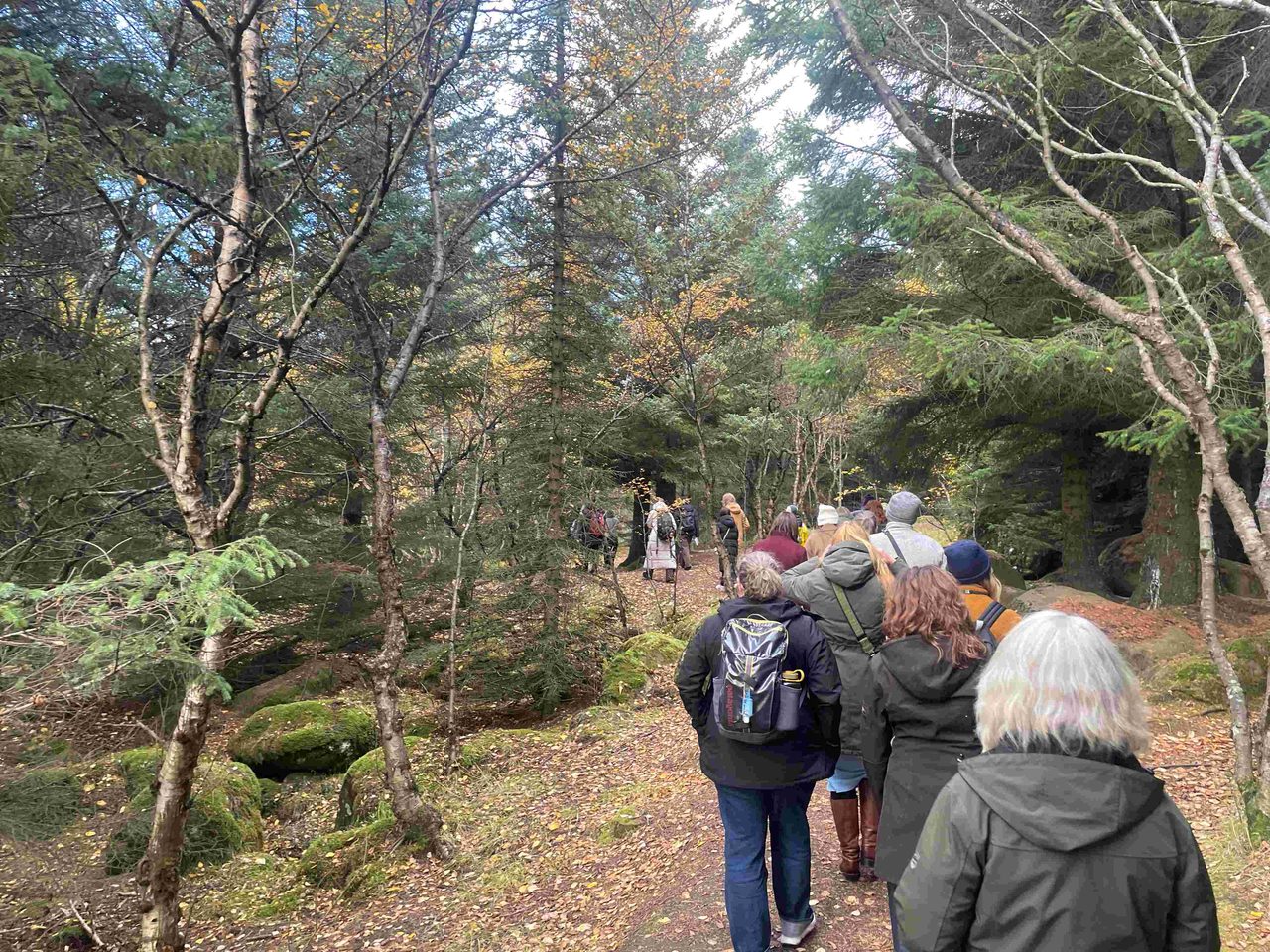
Walking towards more-than-human tourism futures
Outdoor session at the 34th Nordic Symposium on Tourism and Hospitality Research
Text: Elva Björg Einarsdóttir
Photos: Elva Björg Einarsdóttir & Emily Höckert
Ecological Pilgrimage hosted a walking session at the 34th Nordic Symposium on Tourism and Hospitality Research in Reykjavík, Iceland. The session was titled Walking towards more-than-human tourism futures and was organised by Elva Björg Einarsdóttir from the University of Iceland, Emily Höckert from the University of Lapland, Maxim Vlasov from Umeå University, and Jasmine Zhang from the Swedish University of Agricultural Sciences.
The session explored walking as a relational practice and consisted of situated, shared, and uncertain steps with the symposium landscape of Öskjuhlíð, a nearby public outdoor area, as a participant in inquiry. Through collective movement and small-scale experimental interventions, we asked what tourism might become if it cultivated more-than-human relations rather than extracted value. It was driven by curiosity about how alternative ontologies, conceptualisations, and embodied practices might help repair weakened relations between ecosystems and human sociocultural worlds. This prompted the question: what would it mean for tourism to “walk differently”?
Across the Nordic region, climate walks, ecological pilgrimages, and slow mobility initiatives are emerging as embodied responses to ecological concern and responsibility. Such practices are broadening our understanding of tourism and outdoor recreation amid the ecological crisis. Rather than focusing on what walking produces (well-being, economic value, resilience), the session explored how walking might shape relations between people, species, temporalities, places, research practices, and lived worlds.
The session drew a strong crowd, and participants wove four experimental contributions into a collective walk in Öskjuhlíð, engaging with the place’s history and temporalities and the multiplicity of non-human hosts living in the area. Through collective movement and small-scale experimental interventions, the walks were guided by the question of what tourism might become when it cultivates more-than-human relations rather than extracted value. Together, the interventions invited participants to attend to more-than-human lives, histories, and temporalities, and to consider how such attentiveness might nurture care for places and help safeguard biodiversity.
Tarja Salmela, UiT The Arctic University of Norway, invited participants on Weaving a Partial History of the Western Part of Öskjuhlíð. Here, we attended to what once was and what is now, and to the ways in which the more-than-humanness of place emerges as a weaving-together of co-composing durabilities-and-lively-presences. We enacted a partial history of Öskjuhlíð that was sensitive to the potential of visiting (here used as an alternative concept for tourism) to cultivate more-than-human relations across temporalities. Participants engaged with the environment in stillness, followed one layer, and marked a moment of co-composition with an element of Öskjuhlíð.
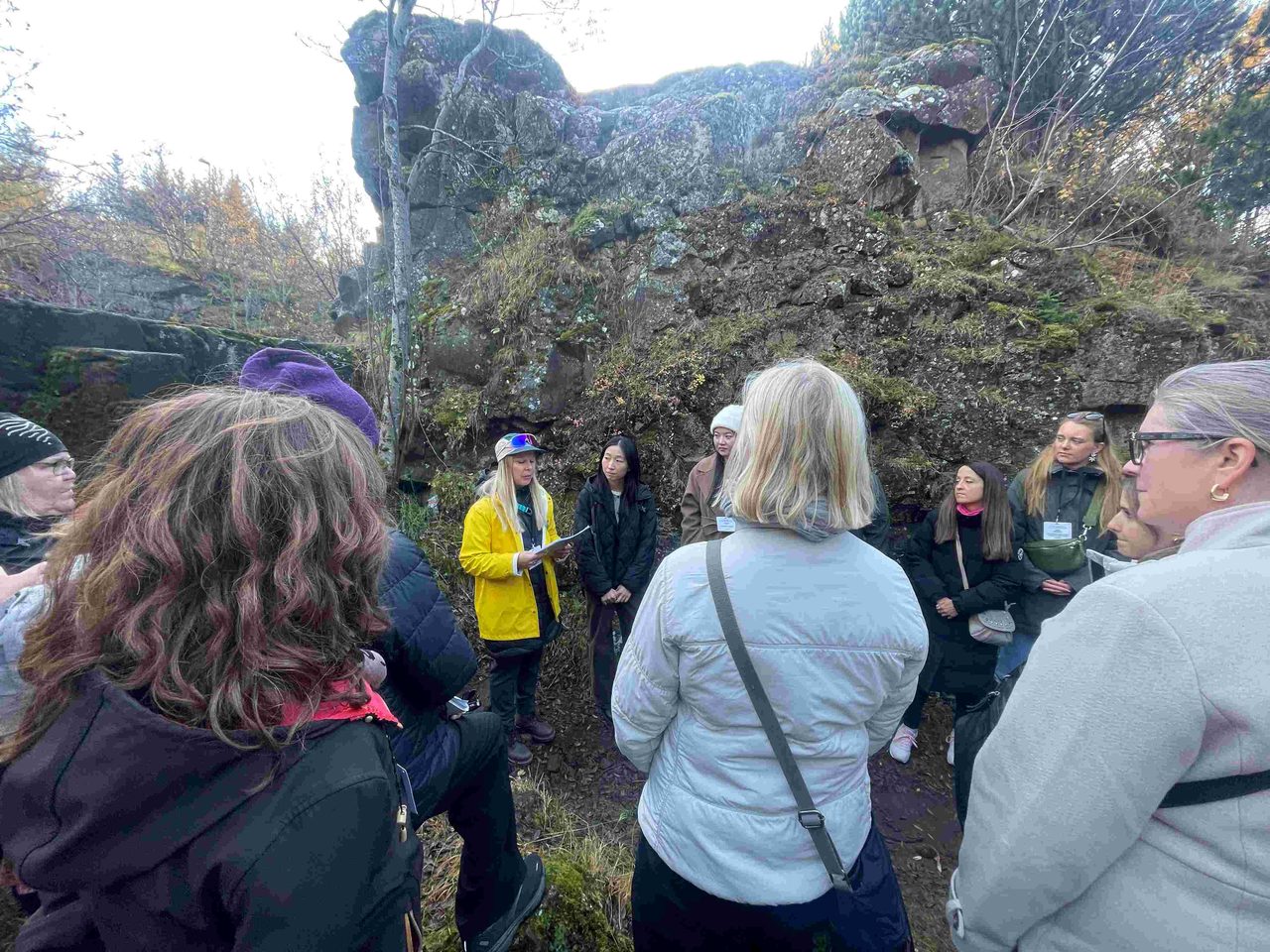
Chris E. Hurst, Northumbria University, invited participants to explore how temporalities are co-experienced in tourism places and how they may shape our embodied experience of being-with many amid planetary-wide nature transformation. This was done by making kin with one more-than-human species in Öskjuhlíð. The intervention, Walking with Collective Temporalities, explored how we might care with tourism places composed of collectives of kin temporalities (including several geological ‘cenes’, life progressions, and temporal rhythms) that overlap and are transformed in the contemporary Anthropocene.
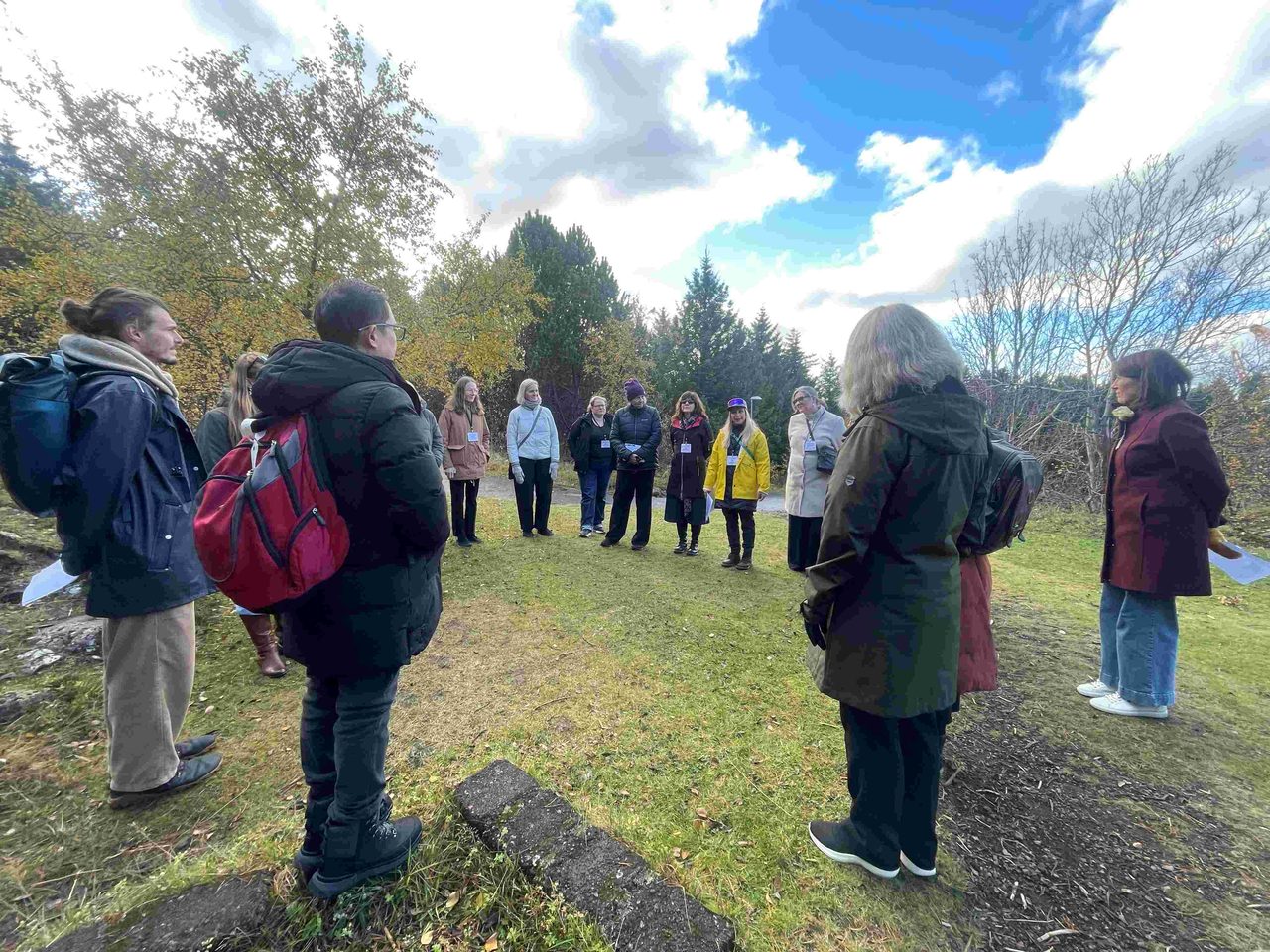
Katrín Anna Lund, University of Iceland, invited participants to stay-with and nourish the more-than-human relations we entangle with in her talk Encountering Extinction: Narrating Stillness with Moving Atmospheres. Katrín Anna’s subject was the Great Auk, an artwork depicting an extinct species by Salvör Nordal on the coastline of Skerjafjörður in Reykjavík. Its attraction lies in a sense of stillness that grows even stronger as it contrasts with the ever-moving, vital surroundings. Choreographies of earth, water, air, and light shape the atmosphere with narratives into which one enmeshes.
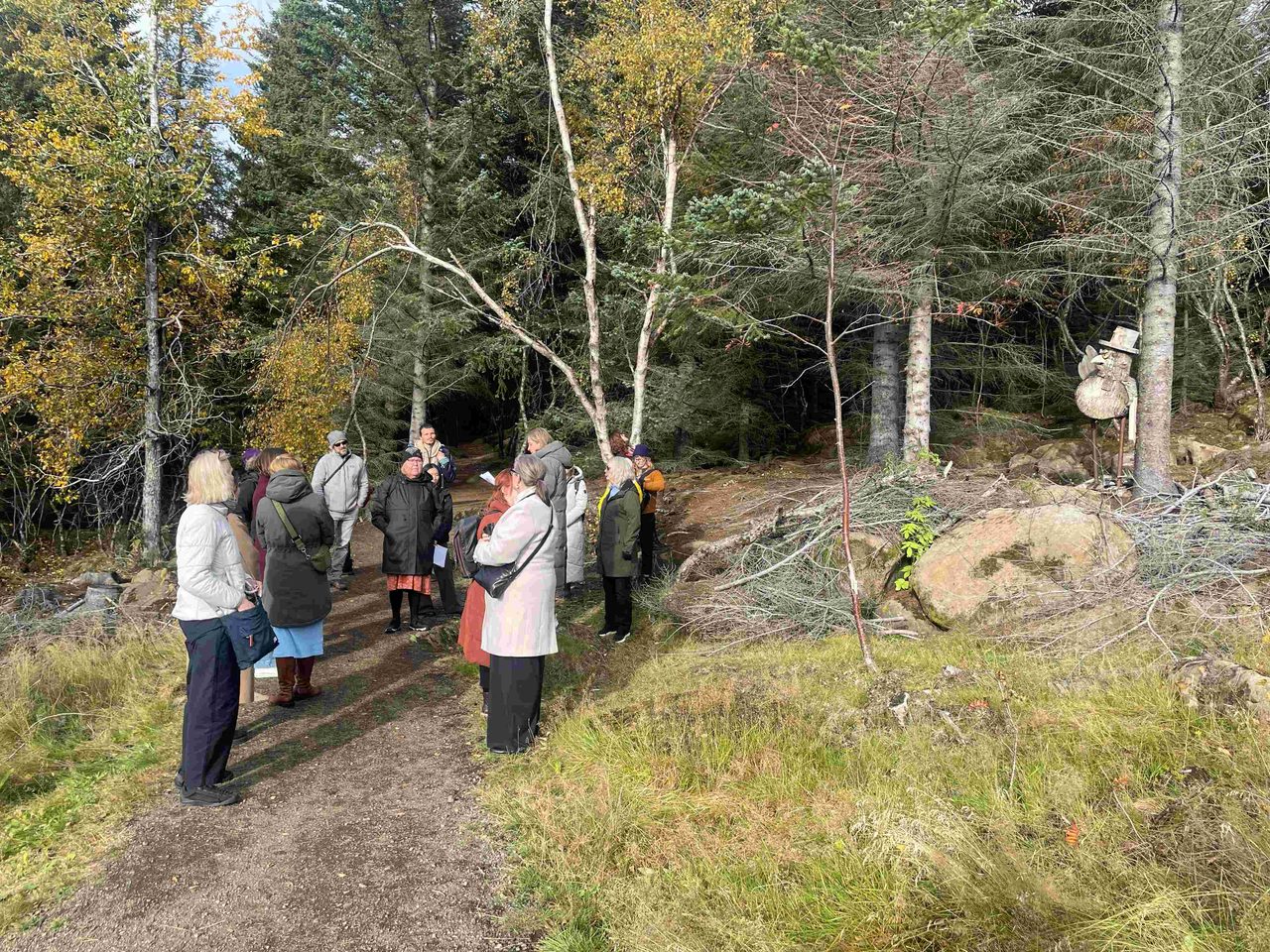
Elva Björg Einarsdóttir, University of Iceland, introduced and invited participants on a reparative walk through Öskjuhlíð. Elva Björg developed the walks, Walking the Vatnsfjörður Trail, through activist actions supporting an old nature reserve in Iceland’s Westfjords and opposing a hydroelectric power plant being built there. Her actions aimed to raise awareness of the reserve’s importance and its diverse more-than-human voices. Participants chose one sense to walk with, helping them notice their surroundings without preconceptions – if possible – and recognise that their stories are not the only ones embedded in the landscape.
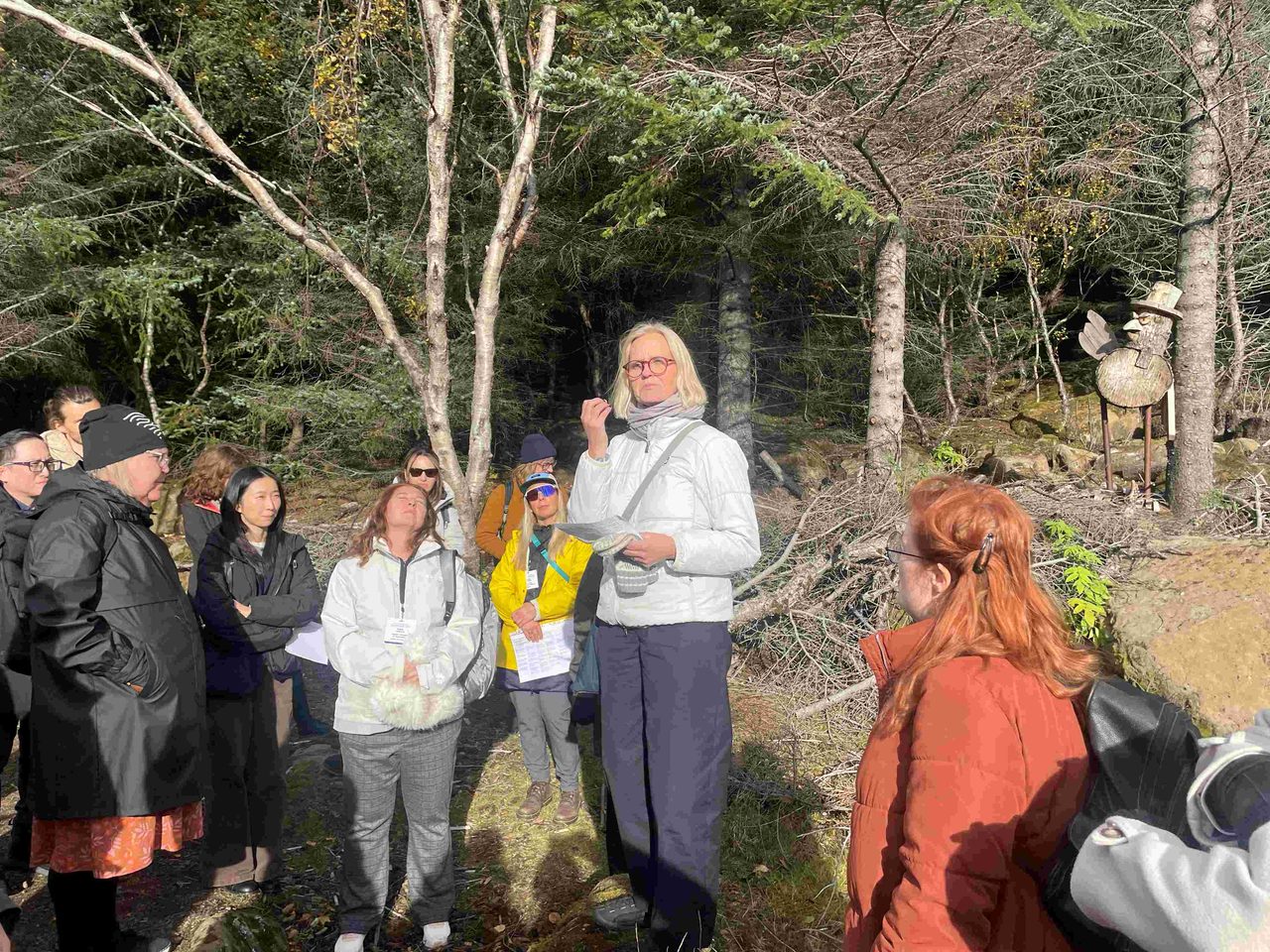
Together, the four interventions brought into view the many relationships that compose a place: between human and more-than-human lives, past and present, different species and temporalities, and the stories through which landscapes are encountered and understood. They encouraged us to notice relationships that may be overlooked, weakened, or in need of care and repair, and to consider how walking might nurture different ways of relating to the places and communities we visit. From attending to more-than-human voices and histories to making kin with other species and raising awareness of threatened habitats, the walks opened up possible pathways towards safeguarding biodiversity through attentiveness, care, and responsibility. They also left us with questions: How might tourism become a practice of caring with rather than extracting from places? And what other ways of walking, visiting, and living with more-than-human communities might we begin to imagine?